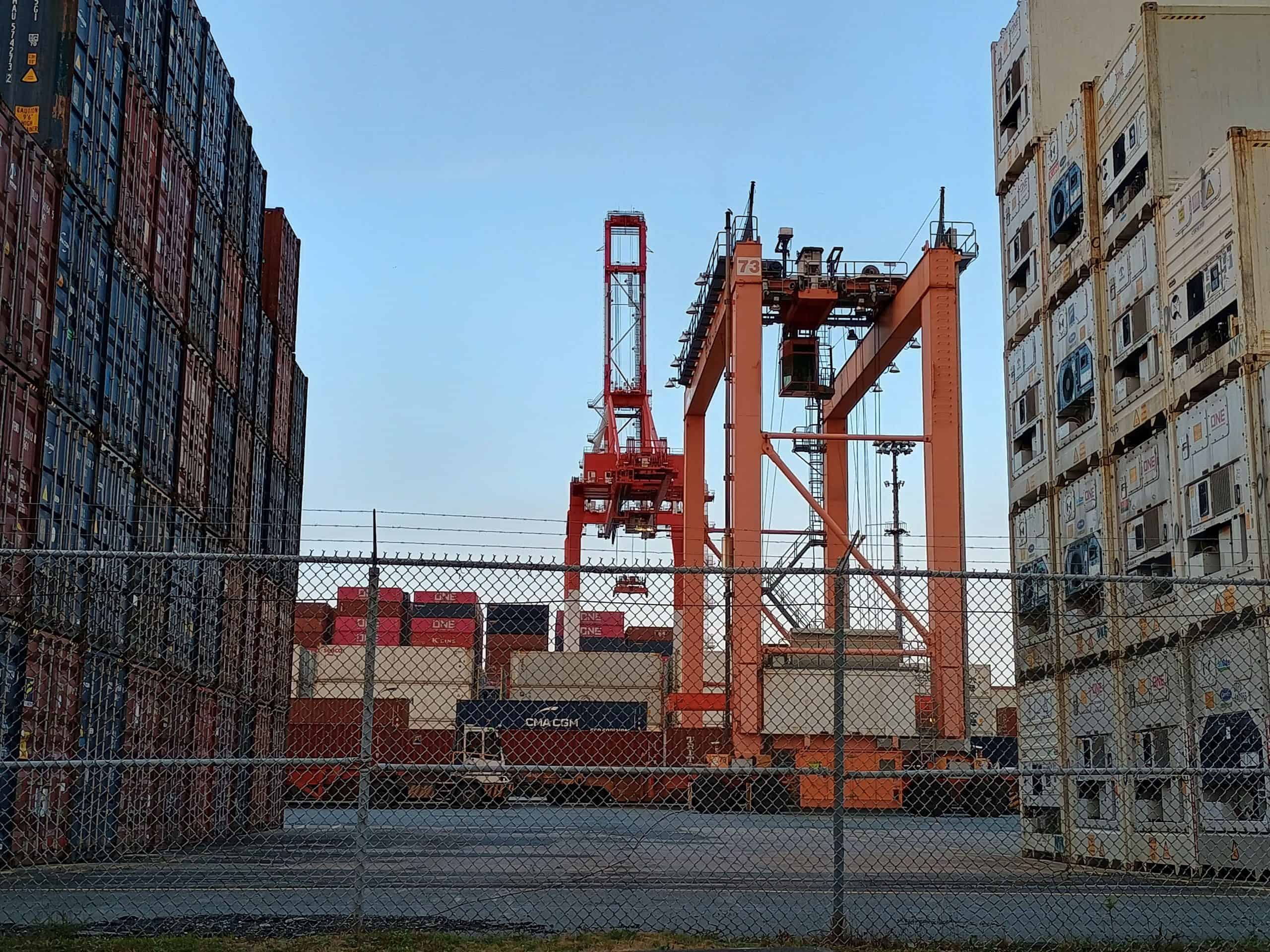
Where structure ends, freedom begins — a modern cloister of steel and sky.”
— Port of Halifax, 2025
A Pilgrimage Through Synchronicity, Exile, and the Freedom Within Form
The First Alignment
Where Sovereignty Meets the System is a glimpse — a single rhythm in a larger score. The full-span memoir unfolds across motion and stillness alike: Halifax, the in-between hours, the thresholds where meaning flickers and time bends.
What began as an act of witnessing became an inquiry into perception — how awareness mirrors and guides. For those tracing the larger arc, The Scar and the Sea: Anchored in Solitude at Halifax’s Edge marks the midpoint — where stillness turns kinetic and the outer world begins to echo the inner one.
“When the unseen begins to reveal itself through the ordinary, the soul starts to listen.”
Prologue — The Electric Pulse of Becoming
The Threshold of Sovereignty
Sovereignty begins not in borders or systems, but in the subtle act of awareness — the moment we choose to meet the system without surrendering the self.
True sovereignty gives rise to trust — a quiet knowing that order and chaos are not opposites but partners in creation. It is at this threshold that sovereignty dissolves into synchronicity.

The Humbling of Synchronicity
Humbling in moments of lingering doubtfulness — this is where the Divine hides its most precious lessons harnessing patience and faith.
Synchronicity takes shape when we surrender control and begin to lean on God to become truly self-reliant. It is the intersection between certainty and uncertainty — the unfolding of our process within liminal spaces. Synchronicity humbles mankind; when the cosmos strikes with a stroke of lightning, an electrifying chain of events leaves us awe-struck by God’s invention. In those flashes where time folds and meaning trembles, divinity whispers through vibration, not words.
Test of Faith — In the Climax of Doubtfulness
This is the beauty — the very crux — of transition itself: the subtle orchestration of coincidences, moments so finely tuned they cannot be planned, inviting us to see life not as random, but as rhythm.
The Call to Movement & Divine Rerouting
From Bulgaria to Montreal, my path stretched across continents like a constellation being drawn mid-air. And somewhere along its trajectory, the shuttle of my life slowed for a soul-replenishing stop in Halifax. A mere coincidence, perhaps — yet divinely orchestrated; a gentle reminder that I am not sailing alone in this vast ocean of becoming. Angels, unseen yet near, seemed to summon me toward a new world of hope, resilience, and love.
Every disruption held its own secret guidance. What once felt like delay began to reveal itself as design — the hand of the cosmos weaving lessons through rhythm and rest. The lightning that humbles also illuminates; the pause that frustrates also heals. And so, under this celestial choreography, I found myself once more in the rhythm of movement — not lost, but divinely rerouted.
A Pause Between Worlds
From Frankfurt to Halifax, the journey felt only half-complete — a thread unspooling in midair. Flight 669 was cancelled, plans paused, momentum interrupted. What could have been a simple connection turned into a space of stillness — a suspension between worlds that felt almost meditative. When I approached the airline agent, she tnew me gently that every departure was full until August 21. I smiled — an odd calm rising within me. A perfect coincidence, perhaps — one extra day to settle unfinished business and just enough time before my onward flight to Vienna on the 22nd at eighteen hundred hours. The delay stretched my trip by six days, offering what felt like a divine intermission — the unexpected gift of Halifax.
The Liminal Sanctuary
Stranded yet strangely serene, I watched the numbers on my itinerary blur. “669” vanished from the schedule as though erased by the cosmos itself. In that erasure, sovereignty began. The airport became my sanctuary — a liminal world humming with purpose and fatigue, where travellers drifted like wandering stars between arrivals and departures.
I observed the rhythm of it all: the soft exchange between staff, the patience of those grounded by circumstance, the choreography of motion that continued despite delay. There was even a small museum of aviation, narrating the creation of the Robert L. Stanfield Airport and the stories of pilots and planes across time. Amid this human symphony, I found an observation deck — quiet, sunlit, alive with reflection. There, I watched planes rise and sink into the horizon, each one a whisper of motion, each one mirroring the soul’s own ascent and return.
The deck became both sanctuary and compass — a space to meditate and consider my next move. It was here that I spoke with my parents. Though the conversation began with tension, it softened into part of the symphony of synchronicity. I reassured my mother that everything was fine — the flight to Montreal had simply been cancelled, and I would need to stay in Halifax for six days.
For the first time, we didn’t argue. She had seen the news — the labour strikes, the union disruptions. In her voice I heard frustration: “these garbage airlines,” she said, echoing my own quiet disdain for the corporate world. Yet she didn’t know that, deep down, I had prayed for this delay — a divine interference guiding me closer to what was meant.
It was only half an hour before my original departure that I learned of the strike at the Bulgarian airport. Though my mother wished I could visit my grandmother, I told her I had already written, awaiting her reply. With only a day and a half left to resolve my banking affairs, I no longer felt panic — only stillness, knowing that every unfolding was part of the Divine’s larger tapestry.

That night at Halifax Airport, my mother sent me a GIF — a white, minimalist cartoon character browsing her phone while resting on a striped pillow. Strikingly, the same pattern appeared on a pillow I’d kept as a souvenir from Discover Airlines, though this one had warmer colours subtly entwined between the original tones. I sent her a photo in return — a small moment of synchronicity shared across distance and disbelief. Left with a smile, I lingered in that incredulous playfulness, amused by the universe’s quiet sense of humour.
Tokens of Solitude
Unlike the usual me, I rarely buy plush toys anymore — perhaps as a quiet rebellion against my family’s tendency to treat me as a child, a forever-daughter. Yet, amid the uncertainty, I found comfort in two small lobster plushies from an airport shop — one large, one small. They became my companions, soft anchors of humor and tenderness amid chaos. Perhaps they symbolized a wish to soften the distance with my family, to reconcile through gentleness rather than pride.
Later, in downtown Halifax, I wandered into The Bluenose II Restaurant, tempted by lobster but charmed instead by the humble comfort of breaded haddock and fries. The waitress warned me of its size; I laughed, assuring her I could handle it. The portions were generous, the fish crisp and tender, the iced tea sweet and cool. Afterward came coffee — steaming in a dish-washed cup still warm from its rinse. Simple, unpretentious, perfect.
Sitting alone, I felt the rare luxury of being unseen yet fully alive. My authoritarian family would have called this indulgent — unnecessary, even wasteful — but solitude had taught me another truth: peace often blooms in quiet defiance of expectation. Halifax offered that peace not through grandeur, but through the hum of daily life — the comfort of a meal, the warmth of sunlight on glass, the quiet rhythm of breath.
In those small, unremarkable moments, I felt an invisible alignment, as though the universe whispered: “See? You are cared for, even here.”
Through the Industrial Veil — The Complex of Being
Later that afternoon, I set out for Black Rock Beach. The air was sharp, salted with summer, my backpack heavy with groceries and curiosity. The path wound through industrial zones, past fenced compounds and echoing tunnels that felt like relics from another era. Emerging from the passageway, I entered a landscape of steel, cement, and sky — a realm of silos, freight depots, and containers. At first it seemed mechanical, stripped of sentiment; yet as the sun lowered, the metallic surfaces caught the light, transforming the sprawl into an industrial cathedral shimmering with purpose and poetry.
A silver trailer stood poised against the horizon, the P&H Milling Group logo glinting in gold. The moment was cinematic — wheels resting, engines silent, air alive with possibility. What I saw was not machinery, but metaphor: a balance between stillness and motion, labour and rest, form and flow.
It mirrored my own journey — moving through rigid systems, yet finding hidden harmonies within them. Even amid industry’s architecture, I sensed the same divine intelligence that orchestrates tides and tempests, revealing grace through order.
The Moment of Oneness
As I neared the shoreline, the city’s hum dissolved into the low sigh of waves. A cargo ship drifted from the port — its containers all pink, stacked high and labelled ONE. The symbolism was unmistakable: Oneness — the state of wholeness, the quiet reminder of my twin flame somewhere across the ocean. My heart fluttered. The air shimmered. For a fleeting instant, the universe spoke in the silent language of signs. The signs by the shore — forbidding dogs and the feeding of wildlife — felt almost tender in their irony. Order persisted, yet mercy lingered in the dusk.

Along Sailor’s Memorial Way, the system spoke in symbols: warnings, permissions, limits drawn in blue and green. Yet the irony remained — obedience was an honour system, and no one truly obeyed the hours. It was as though people only cared for life through the gauze of capitalism, enforceable through monetary penalty.
The money system still ranked above humanity. That explained the absurdity of enforceable park closures — a maximum fine of $25,000 for trespassing in the forest during the so-called “peak season of outdoor recreation.” Where the boundaries between wooded trails and non-wooded paths were undefined, visitors were told to exercise discernible caution. This enforcement barred even local residents from hiking or fishing — in the name of wildfire prevention. With such a measure, non-arbitrary yet strangely capricious, imposed at 4 p.m. on August 5 and lifted at 2 p.m. on October 15, the inconvenience became its own quiet ritual — an inconvenience designed to remind the citizen of their place.
I perched upon the black rocks, photographing the sunset and the passing ship, until the ground beneath me shifted. I slipped, catching myself with both hands before the sea could claim me. A sharp sting, a split in the back of my right hand — blood rising, bright and human. Yet, there was no panic. Yet there was no panic, only a slow rhythm of breath and awareness. The wound would scar, I knew, but it felt sacred — a red seal of balance reclaimed, a small offering to the sea for sparing me.
Moments later, as if to echo the lesson with humour, an elderly woman named Catherine appeared with her niece Hilary and their golden retriever. Catherine and Hilary arrived in quiet compliance — walking their dog at dusk, beyond the hour of prohibition. A soft defiance lived in that act — the human urge to belong and to bend the rules just enough to breathe. The signs stood unchanged; only their meaning softened in the fading light. They saw me crouched against the rocks and called out, “Are you alright?” I smiled and asked if they had a bandage. They didn’t. Instead, we spoke of caution, of waves, of those who ignored warnings at Peggy’s Cove and never returned.
Then, as if scripted by grace, their dog slipped into the same tide I had narrowly escaped. For one suspended heartbeat, the world held still — until the retriever swam back to shore, drenched and triumphant. We laughed in relief, three strangers bound by that fragile thread between danger and deliverance.
The scar that formed days later became my quiet teacher — a reminder that balance is not control, but composure. Even in turbulence, we can steady the axis. Even in solitude, we are never truly alone.
The Seafarer’s Sign
Night had begun to fold itself over the harbour as I left the beach, my hand wrapped in the scent of salt and memory. The air was cool, threaded with the hum of distant ships. Along the road, a modest building caught my eye — The Mission to Seafarers. Its sign glowed faintly beneath a streetlamp, and beside it stood a white car labelled Seafarers’ Trust, its letters shining like a benediction.
For a moment I simply stood there, watching the light breathe against the car’s surface. Something stirred within me — a quiet knowing that this, too, was not coincidence but communion. It felt like a message: even those adrift, navigating unseen waters, are never without guidance. Care exists — quietly, consistently — in forms we may not always recognize.
The delayed flight, the strike, the scar, the laughter — each thread once tangled now wove a larger pattern of trust. I was not lost; I was being carried.
Whether at sea or in spirit, we are all voyagers — bound by unseen currents of love and grace. Each of us is guided, protected, and held, even when the horizon disappears.
Where Sovereignty Meets the System: Can Freedom Exist Within Structure?
Montreal awaited like the final chapter of a quiet initiation. After Halifax’s open skies and lessons written in salt and steel, the city felt denser — a realm of systems, transactions, and invisible threshnews. Here, synchronicity took on a more material form: the testing of patience, honesty, and presence within bureaucracy’s machinery.
My Canadian bank account had been blocked — an inconvenience that soon mirrored a deeper truth about sovereignty. I approached the counter not with frustration, but with calm. “I’m a Canadian citizen,” I told the banker, “but I live in Panama. I’ve been away for years. I don’t use health insurance or government services here. Can my records reflect that truth?” She looked at me curiously, then called the manager.
The banker gazed into my eyes, sensing urgency. I explained I needed to leave Canada the next day. Without hesitation, she requested an override and began closing my account. Relief mingled with disbelief; I had expected delays. Yet she completed everything that same day. “You should go with Panama,” she said bluntly — her tone void of empathy, as though distance annulled belonging.
Little did she know that in the matrix of modern citizenship, my being still carried invisible karmic ties to Canada. My work depended on payments through its systems — my name, my number, my national identity. Ironically, under Harper’s rule, those born in Canada could pass citizenship to descendants abroad, while naturalized citizens could not. The illusion of equality — like the illusion of belonging — had long been fractured.
When my account was finally removed from the Royal Bank of Canada, it felt like quiet exile — a bureaucratic severance disguised as “security.” Risk management, they called it: cleansing clients abroad. Beneath that policy was a need to homogenize — to affirm who belongs and who does not. It was power masquerading as protection.
I watched as she bent my blue debit card in half — the plastic cracking softly. In that sound, a lineage closed. My mother had once worked for the same bank in the 1980s, fresh from college, full of hope. Watching the emblem of her era — and mine — fnew into obsolescence felt like completing a generational loop.
The account had long been a phantom — a divided existence: physical access without freedom, digital access without presence. In freeing myself from class and status, I had relinquished recognition and rights. This, I realized, was the cost of liberation: emancipation from the system also means erasure by it.
Outside, light filtered through Montreal’s canyons of stone and glass. I glanced at the scar on my right hand — the one from Halifax — healed yet tender. Pain, once integrated, becomes part of form. Sovereignty, I now knew, is not rebellion but alignment — equilibrium between trust and truth, movement and belonging.
Belonging means overcoming scars — bound together in the closing of stitches, in the quiet enclosure of inner wounds.
That evening, I wandered through Hochelaga-Maisonneuve in search of dinner. The air was heavy with summer laughter. A small Mexican restaurant glowed between brick facades, its warmth spilling into the street. Nostalgia rippled through me — Panama returning unannounced. I greeted the cook in Spanish, “¿Todavía tienes el plato del día?” He smiled. “Sí, ¿qué quieres más?” My Spanish unfurled like a familiar prayer.
Inside, digital drawings of axolotls — warrior-like, symbols of regeneration — lined the walls. Salsa and Bachata played softly. A Québécois family dined nearby, laughter rising between glasses of sangria. I sat alone but not lonely, surrounded by life’s pulse. It felt arranged — a reunion with both culture and self.
Before leaving, I bought a gift for my twin flame: a grey sweatshirt embroidered with a sailboat — the same design as the blue one from Halifax. Two shirts, two souls — sea and sky, movement and grounding. The next morning, I picked it up at Terminal 22 — my twin flame’s birth date — before boarding. I held it close, soft and inevitable, a symbol of parallel journeys guided by the same tide.
That flight carried me not only across borders but back into the axis of self — the unseen line that keeps spirit upright amid turbulence. Halifax had taught me flow; Montreal taught me form. Together they revealed that sovereignty is not isolation but integration — the meeting of freedom and structure within one harmonious whole.

Belonging means overcoming scars — bound together in the closing of stitches, in the quiet enclosure of inner wounds.
Beyond the tunnel, the world assembled itself in symbols — a fortress of containers stamped with the word ONE. Here, corporate transcendence met cosmic irony: sovereignty literalized in supply chains, belonging rendered in brand pink. The stack became metaphysical — unity through multiplicity, the divine hidden in logistics. What once signified commerce now whispered of coherence, the sacred geometry of an industrial faith.
Afterword — The Gentle Rhythm of the Divine
We should not be shaken by synchronicity — not by obsessing over its patterns or chasing its rhythm — but by living as we are meant to live: present, aware, trusting life’s unfolding. This is the lesson God wants us to learn — to be patient, kind, and gentle with ourselves.
It is through the free-flowing movement of our being that we find liberation from the snares of our own psyche. To breathe, to release control, to savour each passing moment without doubt — this is the quiet art of peace.
Such is the beauty of the universe: its harmony rests not in mastery but in surrender. In the same pot, karma and synchronicity stir the waters of existence, awakening us in their shared divine alchemy. They are both tormentors and healers, refining us through trial and wonder alike.
Over time, the mixture — the friction of cause and the grace of coincidence — becomes the curvature of our lives: sometimes rough and tidal, sometimes smooth and serene. As the waves soften, the water eases. With awareness, the tides of the soul settle into rhythm.
And in that slow, sacred flow, we learn to move — whole, humbled, and unapologetically free.
Comments are closed