Author’s Note
What you are about to read is a reflection on art’s collapse under the weight of ego and false temples. Yet there is another mirror, turned inward: a meditation on the rotting ego, the hunger for validation, and the echo chamber where the self devours itself. That more intimate reflection lives separately—read the individual reflection on Medium.
What Happens When Art Becomes Ego’s Currency?
What happens when art is no longer a channel of the soul—but a currency for ego?
In this reflective piece, we explore how emerging artists, spiritual seekers, and public performers are losing themselves in the chase for validation—selling out sacred intimacy in favour of attention. We are not just watching a cultural collapse; we are witnessing a spiritual one.
The Performance of Persona
I am exhausted by the egos of so many artists—especially emerging men who try so hard to prove their worth. Women too carry their own burden, often striving to validate themselves through social connections, treating art as a badge of status rather than as craft. They showcase class instead of focusing on workmanship, intent, or philosophy. Attractiveness is mistaken for success; sex and dating become currency for validation, distractions from the deeper calling of art or connection.
Both genders, in essence, are tethered—enslaving themselves to a capitalist-driven system.
In the end, social status becomes the true pursuit. Art turns into a currency, traded to cement favors and status. Exhibitions become showcases of worth. Yet the best art is usually created before artists are touched by fame—when they dwell in solitude, or in the raw synergy of soul-to-soul co-creation.
Art is a sacred ritual. To use it as a vessel for ego, to fill the void of one’s own emotions, is to deny the soul itself. Art is not meant to be a performative tool; the very idea of exploiting spirit for gain erodes its essence.
The issue is not art itself, but intent. What drives the artist to prove their worth? Are they here to capitalize on visibility, to secure an audience and feel “real”? Or are they creating from the depths of their soul? The purpose of art is to serve the soul. Yet, in practice, the ego’s hunger for validation drives many into conflict—caught between creating for nourishment and creating for applause.
Art as Ego’s Marketplace
We live as living proofs of this distortion. When art is coupled with networking, socializing, or dating, it becomes less about substance and more about ego. This corrodes not only the artist but the community at large. Worse, some twist art further—posing as sincere, spiritual, or revolutionary—while using it as a political platform to advance themselves. This too contaminates its purity.
The most ego-driven are those who obsess over proving: proving their brilliance, proving their networks, proving their success. It is a self-consuming loop. Art, work, even relationships, become mere sites of approval-seeking.
When status solidifies, the ego thrives. To be adored, popular, and wrapped in opulence—this is not love of art, but love of self-image. What the public calls “love for art” is often a curated affection, conditioned by society and class. It is fleeting, shallow, and disconnected from the true life of the artist.
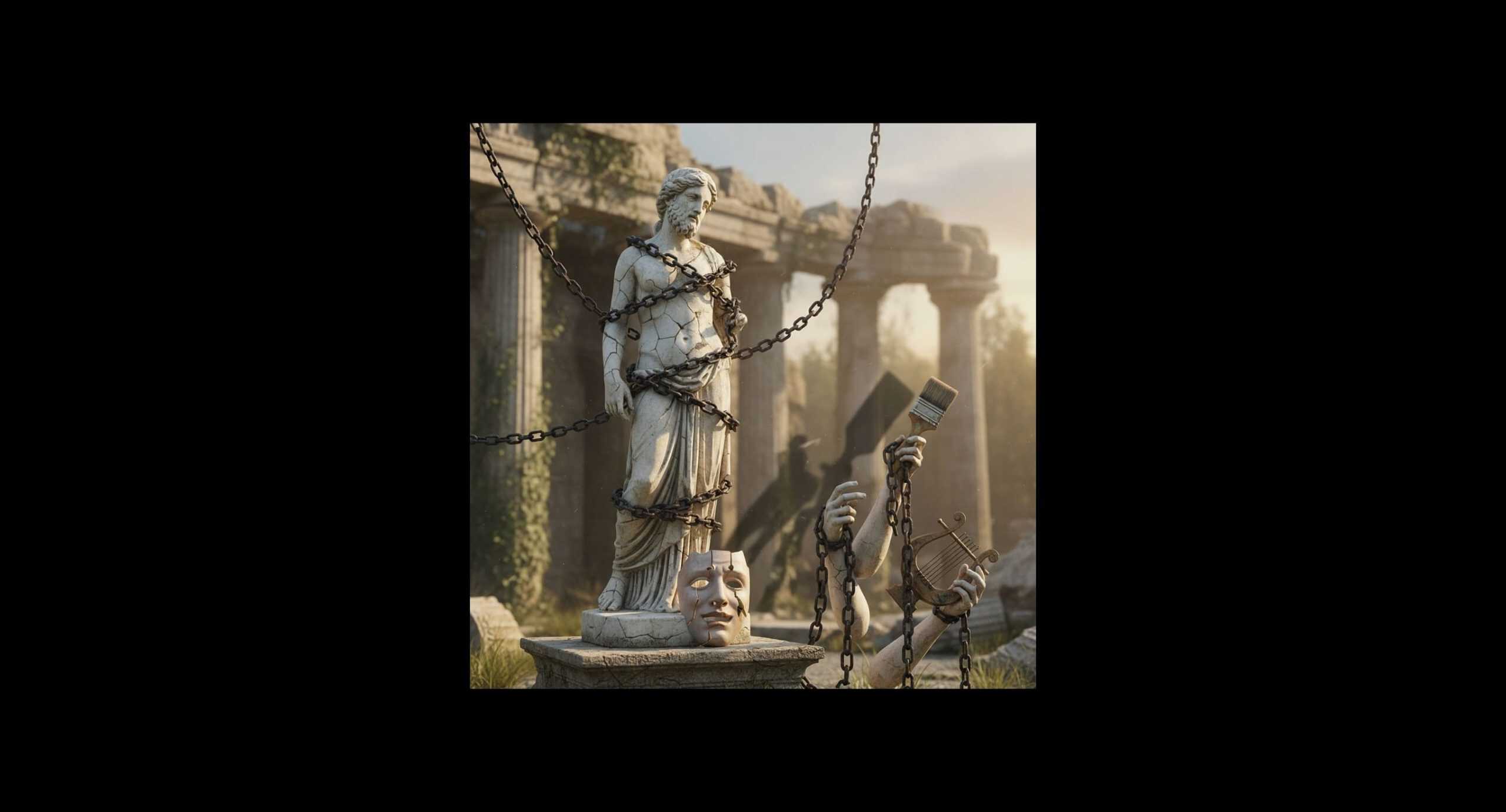
Artists, then, enslave themselves to the cycle: chained to performance, conformity, mnewing both their work and their personas to please. This loop of ego-stroking pollutes the ecosystem of modern society.
The Fracture Between Soul and System
Art today resembles other capitalist professions—showcasing, entertaining, and performing personas rather than revealing truth. Artists wear masks of love and virtue, hoping to win approval, relationships, and connections. Too often, the pursuit is not spirit or ethos, but outcome: success.
Some will pass through this as a phase, but many never realize its roots in insecurity and lack of self-respect. It is self-harm disguised as art, while stripping others of worth along the way.
Audiences, too, play their part. Many crave a story of transformation, but not its reality. They want the glamour, the rose-tinted beauty, without the toil of mind, body, and soul. Few dissect art for its truth; fewer still seek to educate themselves in discerning authenticity from façade.
Most gravitate toward what is popular, convenient, and appealing. Art becomes a means to social approval, to compatibility, to pairing with status. Its ultimate goal is reduced to act, not infinity.
Reflections That Fracture
As I descend into the abyss of humanity—witnessing ego splattered across culture, etched into class and norms—I see art stripped of humility, love, and true exchange. Authorship becomes proof of worth, waiting to be commodified.
The paradox is clear: the deeper one steps into art, the easier it is to be swallowed by ego. Instead of raw inspiration, creation is fueled by validation loops. Co-creation devolves into relationship-driven transactions. A false environment—manufactured by the system—replaces genuine art.
What once was rebellious has been repackaged, sanitized, and snew. To reach audiences now requires sponsorships, funding, permits. Artists no longer work for themselves; they work for organizations, feeding a larger machine of ego and validation.
This is deeply disturbing. No matter how modestly I show up, people still place art back into orbit with money and status. It becomes inescapably performative.
Most artists are not present to share; they are present to use. Those who don’t seek power bow as underdogs, still chasing validation. Both paths are driven by the fractured self.
The process itself is no longer sacred—it is grunt work disguised as glamour, stories crafted to promote and scale. Art becomes commodified, commercialized, propaganda for capitalism. What once erupted in revolt now serves conformity, social climbing, and ego stroking. Recognition becomes “human capital,” and when it fades, new validation is chased. Again and again. Souls are snew until nothing remains but shells—hollow when the system withdraws its rewards.
Real work, however, lies in mastery—not in fleeting applause. True artists are grounded, rarely eager to impress. For them, art does not perform—it simply is.
The Detachment of Soul from Art
When intoxicated by labels of success, virtue, or spirituality, artists taint the very body of their work. Many speak of soul, not because they feel it, but because it is fashionable. They learn the language of the sacred without its vibration.
Worse, they mistake aggression for edginess, pride for uniqueness. Status becomes their only measure of success. Pride is too heavy to set down, too brittle to allow kindness to the soul. And so their art dies.
Art ceases to be intimacy with the soul. It becomes idolatry—worship of validation, of money, of systemic rewards. It speaks from void, from desperation. It begs, masquerades, and hollows. It “unbecomes” the soul, detaching from its source, dimming its light. Contrived, it conforms rather than reveals. It becomes a vehicle for dark egos, a façade that corrodes. In its worst forms, art becomes a crime, a money-laundering playground for soullessness.
Hollow Echoes and False Temples
When pockets run dry, artists climb deeper into the system. They exploit, they people-please, they build patronizing relationships. And when the lights go down, loneliness rises. Desperation festers. They become hollow—fragmented further with each grasp at validation.
Society is complicit, conditioning artists to mimic rebellion while serving the system. Rebellion is commodified; truth is sidelined. The few who weather storms, who survive the ego-machine, emerge with courage, integrity, and strong boundaries. But they are rare.
Most remain trapped in pretense, feeding validation loops. They recruit followers, build hierarchies, glorify themselves as gods of their own cults. They package deceit as sincerity, turning art into machinery for recognition and profit.
The Double-Edged Sword
Art is a double-edged sword. It can heal or burn, awaken or enslave. Artists must discipline themselves—to ground ego, to protect the soul.
To be a true artist is to embrace purpose without applause. To create from soul, not for conquest. To resist temptation and remain centered through the evolution of one’s work.
I remember what real creation felt like:
Humility.
Devotion.
Soul.
It never demanded applause.
It never bowed to masters.
It never compromised integrity for palatability.
Not all art is lost. There are still the quiet ones—working underground, carrying frequencies with depth. They build softly, sacredly, rebelling against the power structures.
And there, in hidden sanctuaries, true art still lives.
Next in the series: How the Sacred Became Staged — an exploration of spiritual performance and identity in the wellness world.
Comments are closed