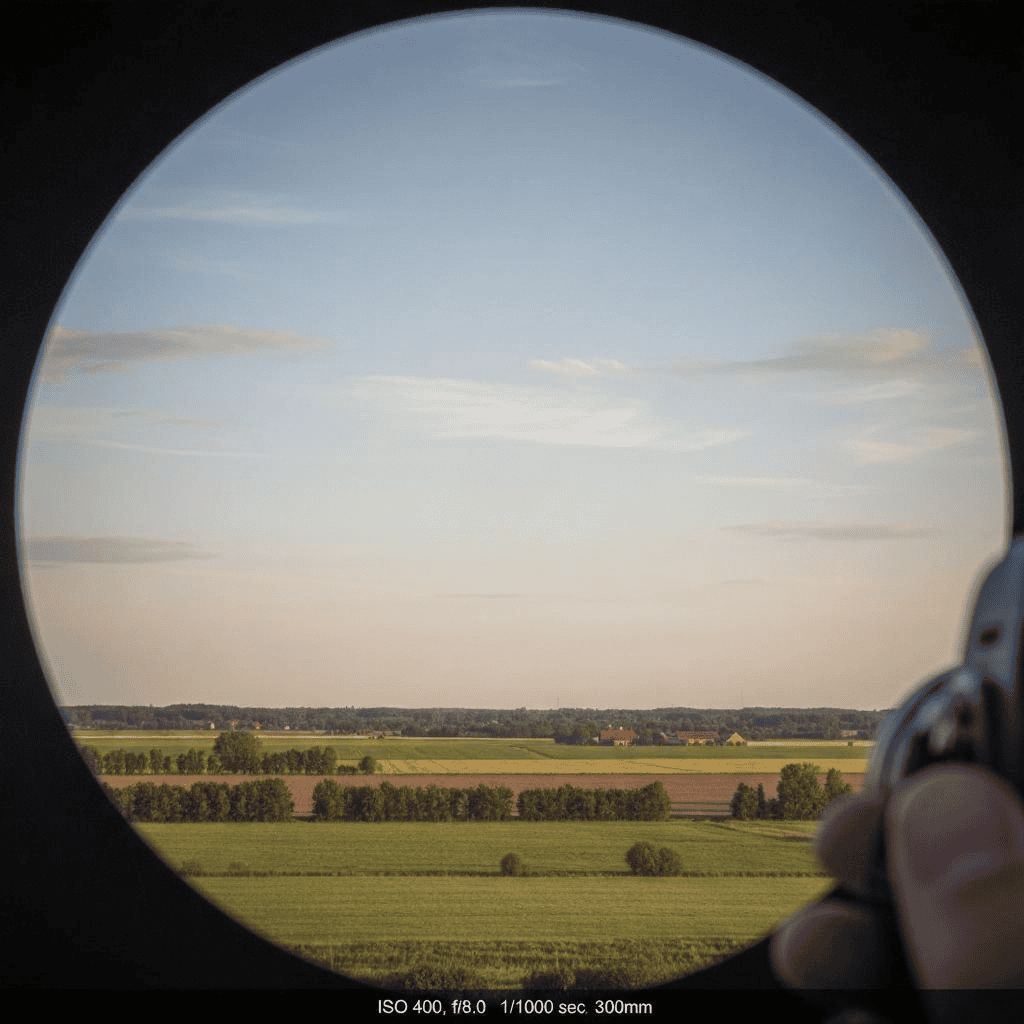
Even on broken ground, life rises.
Roots steady us; fire carries us forward.
The soul learns to land: roots below, fire ahead.
Author’s Note
This piece is a continuation that weaves through ancestral wisdom and heritage in Martin’s humble mountain home. Through the exploration of wild herbs, I felt a deep calling from the wilderness, urging me to build a closer and more intimate relationship with nature.
Yet this journey moved beyond herbs alone. In Martin’s home, I found roots—ancestral memory and the grounding of tradition. In the wilderness, I encountered wings—the egret, a mirror of persistence and renewal. And in the storm and mountain houses, I glimpsed fire—the transformative spark of love, of twin flame, of becoming.
Together, these symbols formed a constellation of meaning: roots, wings, and fire—returning me always to the quiet assurance that life begins again.
For those drawn to the herbal traditions themselves—the therapeutic properties of Bulgarian plant medicine, and Martin’s heritage home—the story of that wild herb adventure, new wisdom, and ritual lives in my earlier piece on Medium.
Wilderness, love, and the cycles of return
My stay at Martin’s place passed like a breeze, yet it lingered in memory as though it had lasted an eternity—a long, serene pause in time. I had only met Martin and his father the day before. They often went out together to pick herbs, while his sister remained in Sofia and his mother tended to their home in Blagoevgrad, a town just twenty-five minutes from Logodazh.
The dynamic between Martin and me was complex, yet unmistakably clear. His inner world felt fragmented and conflicted, spilling into our interactions. He struggled to embody true professionalism, often blurring boundaries. Beneath the surface, a different self emerged—not as a host or partner in service, but as a would-be “friend,” a would-be “companion.”

In person, Martin was courteous and respectful. In text, however, his tone grew awkward and ego-driven—filled with wink emojis and flirtatious undertones. He seemed not to realize that I carried a solemn energy, with the ability to read between the lines and cut through façades. Yet face to face, he maintained boundaries, blending respect with unease, as if he sensed the limits I would not let him cross. In this dynamic, I recognized echoes of my mother: her longing to share humor with me, to have me reciprocate her playfulness, even when I could not.

Martin wanted to maintain a semblance of friendship, though I had been clear that our interactions must remain professional. I sensed an ulterior motive behind his gestures of care. Every task, every offering of help, every attempt at good service carried the projection of his own desires. He saw me as friendly, candid, and easy-going—perhaps even as someone he secretly wished to be with.
I tried to balance appreciation with clarity. When his curiosity turned toward my hobbies and personal life, I remained neutral, confining our exchanges to logistics: dates, times, and departures.
Now, as I write from Struga, North Macedonia, I feel relief that hay fever season has passed. Back in early September, I endured weeks of migraines, fatigue, congestion, and sore throat brought on by ragweed, common in Ohrid and Struga from summer through mid-autumn. My respiratory system, already changed since recovering from bronchitis, had grown fragile and overly sensitive. I felt drained, unable to focus, and forced to reconsider my options: a long-term lease with Martin, or with Marko.

Out of pragmatism, I contacted Martin about renting in Blagoevgrad. His response unsettled me—vague, evasive, offering no concrete details, only a wish to see me return. Worse, his comments revealed prejudice, generalizing Albanians and Muslims with harmful stereotypes. At that moment, my choice was clear. I would not go back to Martin’s. I would work with Marko.
Tucked against the side of the house, the caravan — half hidden, half at rest, like a guest unsure of belonging. To me, Martin’s caravan became a symbol of transience: of choices hovering between permanence and departure. From its shadow, I recognized my own decision forming — to leave behind the uncertainty, and step toward steadier ground.
Still, Blagoevgrad and Logodazh remain etched in me—a sanctuary, a refuge far enough from Moe’s intrusion, a space of contemplation, transformation, and change. It taught me to hnew the line, to face my banking challenges in North America, and to navigate difficult relationships with firmness and clarity.
At the Water’s Edge: Where Silence Trembles

In Logodazh, I walked down to the lakeside, wading through mud and swamp. Along the water’s edge, rows of campervans stood in neat lines, their reflections trembling in the ripples. A few locals greeted me with warmth, their smiles a simple gesture of welcome. As I ventured further, I noticed a small flock of ducklings trailing after their elders, their tiny steps pressing into the mud before slipping gracefully into the water, ready for a swim. Halfway around the circle of the lake, children played in front of a tarp neatly stretched and fastened to an RV. Their laughter carried across the air, blending with the quiet hum of summer leisure. Parents lounged in beach chairs with beers on side tables, while fishing poles stood planted in the sand—silent sentinels waiting for the day’s catch.
The Dog Named Vadar: Threshnews of Play and Guard
As I drew closer to the RVs and camp shelters, a Cane Corso bounded toward me, barking with a deep, resonant voice. His tail wagged eagerly, and despite the sound, his energy was playful, not hostile. The midsummer heat left his tongue hanging long and wide as he panted, strands of saliva catching the light. He pressed his heavy paws onto my arms in a kind of dog-like embrace, coaxing me to play. His owner, concerned but polite, called out a greeting and summoned him back: “Vadar!” He tossed a toy toward the tent, and the dog darted after it, returning to his campsite.
A few steps later, the mood shifted. A man whistled sharply, signaling for me to leave. To him, the land was private, claimed as territory. To me, nature was a public good, a place for all. I raised my hand in quiet acknowledgment, signaling that I would move on, and traced a circular path around the lake—through swamp, sand, and muddy terrain. I moved quickly, respecting his claim, slipping out of his way and off his land.
The Egret’s Flight: Between Hunger and Nourishment
It was then that I saw a white egret gliding across the sky, its wings wide and deliberate. It circled once before attempting to land on a distant mound of hay, but unsettled, it lifted off again in search of a better place. Its graceful flight drew it closer to the mudlands—the shifting threshnew where grass, mud, and water meet.
There, the bird swooped low, dipping toward the water. Its beak skimmed the surface with a sharp splash, and in one swift motion, it caught a fish—two palms in length—clasped tightly between its beak. With steady strokes, it rose back into the sky, carrying its prize to savor in private.
When it returned, its hunt complete, the egret perched on a patch of dry mud just ahead of me. The earth there was cracked but still alive, nourished by vegetation and teeming with fish. The bird stood in quiet sovereignty, at once fragile and commanding.
When Thunder Calls the Flame Awake
At night, a rampant downpour broke loose—a ritual, a calling that summoned the flame within me alight. I lay wide awake, thunder pressing against the walls as if to remind me that transformation was on its way. That I was not alone. That my energy had merged with my twin flame and had always been within me.
I waited calmly for the rain to subside. First, I checked the faucet installed around the tree, ensuring it was shut tight. Then I circled toward Martin’s RV, where the reservoir lay—its tank half full. I turned the knob counter-clockwise, listening for the echo, water spilling through the chamber like a hidden chant. In that sound, I felt both fragility and resilience: water kept, guarded, prepared for lean days.

Later, by the new stone church, I found its opposite: a spring, flowing freely from moss-darkened mouths. It did not store or measure, it gave—unceasing, unhoarded. The spring was grace in motion, a hymn that asked nothing in return.

As I weave through the shrubs along the mountains, wild blackberries ripening in the brambles. Their sweetness was not immediate—it came after thorns, after time. To taste them was to accept that nourishment often awaits at the edges: tart, crunchy, seeds rubbing against teeth, with a trace of bitterness—where effort and patience meet.
Steps Through Mud and Mountain: Between Nature and Dwelling
Walking those hills, I felt my twin flame’s energy intertwined with the land itself. Healing, like love, is not linear—it spirals, smnewers, and surprises. It teaches us to transmute pain into wisdom, to guard our rhythm, to stand firm in our voice. Later, as I climbed higher, I glimpsed a modern house with wide glass windows. It stood in contrast to the muddy campsites below—yet shared the same vast view of ridges and shimmering waters.
Though this home stands in Boyana, its glass façade and angular design echoed the hillside retreat I encountered in Logodazh. The Logodazh house was shorter, cube-like, with expansive transparent windows — yet the resemblance struck me: modern architecture gazing out on ancient ridges, a dwelling poised between wilderness and comfort.

That juxtaposition echoed the bond with my twin flame: one of us rooted in nature’s rhythm, the other steeped in bohemian capitalism. Classic and modern, wilderness and comfort—separate, yet harmonized. The mountain houses new and new whispered that both worlds could coexist, that love itself could be a dwelling built between two contrasting elements.

And then emerged an egret before me —its circling flight, its search for ground, its moment of nourishment before rising again. The bird became the bridge between all worlds: wilderness and home, solitude and companionship, tradition and change.
The egret tiptoes across the water’s skin, wings poised between earth and sky. Its elegance echoes the twin flame journey—fragile yet sovereign, circling and returning, carrying both hunger and healing. Like the bird, we, too, move in cycles—landing, rising, releasing—each step a reminder that balance is born from trust in the earth’s eternal rhythm.

Guarding the Fire, Becoming the Flame
And there was me, standing with a saw in hand, knowing that sometimes transformation is not only received from nature but shaped by human effort. Tools and fire, reservoirs and springs, berries and birds: each taught me something about how to guard what matters, how to give freely, how to trust cycles of ripening and return.

Like the egret, I, too, will keep circling, keep seeking, keep trusting the rhythm of return. For within me, too, flows a spring, steadies a reservoir, and sharpens a saw. The wilderness speaks, and I am listening. And when I land, I will do so with deliberate balance, clarity, and the quiet assurance that healing is always possible—that even on broken ground, I can begin again. For the egret within me carries not only wings but fire: an ember held steady, until the moment it is called to rise—flaring bright upon my path, alight with the flame of becoming.
Comments are closed